
Battle Exhibition Behind Closed Doors
Dance as the only crown.
A venue kept secret until the eve. Eighteen athletes, six judges, no prize money. Behind closed doors battle exhibitions where the art of freestyle takes centre stage, and where you dance, deep down, more against yourself than against the other.
The concept
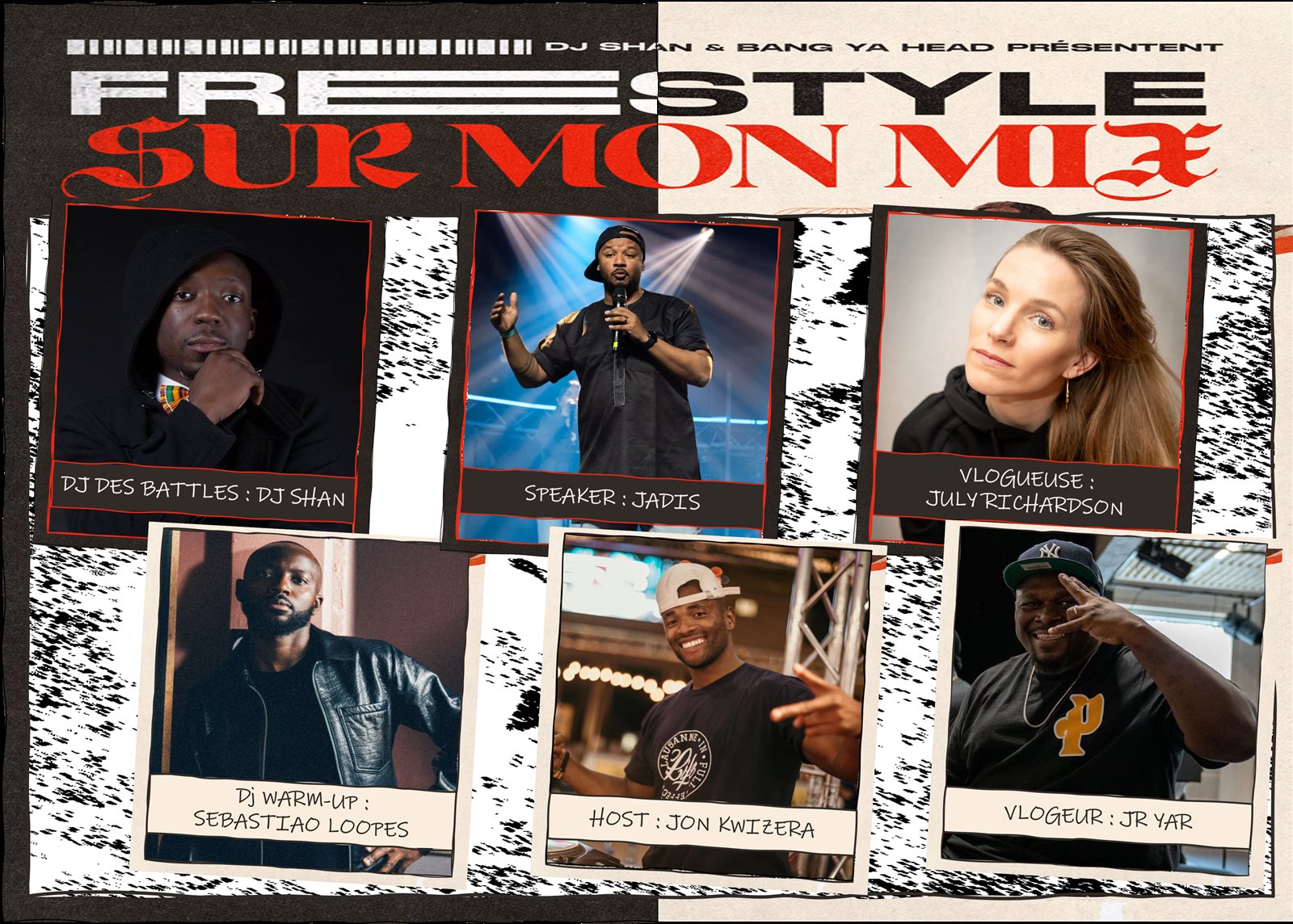
Here, the true dancers are first of all athletes, who carry the passion of dance through their whole personality. Freestyle sur mon Mix, created by DJ Shan and D-Say of the Bang Ya Head collective, brings them together in behind closed doors battle exhibitions, where the art of freestyle comes before everything, never money. Respect counts more than victory, and everyone leaves greater than before. Deep down, it is a battle against oneself as much as against the other, under the sign of Peace, Love, Unity & Having Fun.
The behind closed doors experience
Nobody knows where. The address is revealed only on the eve, by invitation, to the judges, athletes and guests alone. Behind closed doors, you don't dance to be seen, you dance for real. Each one comes in with a single guest, eighteen VIPs in all, because a moment like this is not meant to be lived alone.
The format
Eighteen behind closed doors battle exhibitions, on hip-hop tracks only. Two battles per athlete, of two rounds of two minutes each.
Three categories
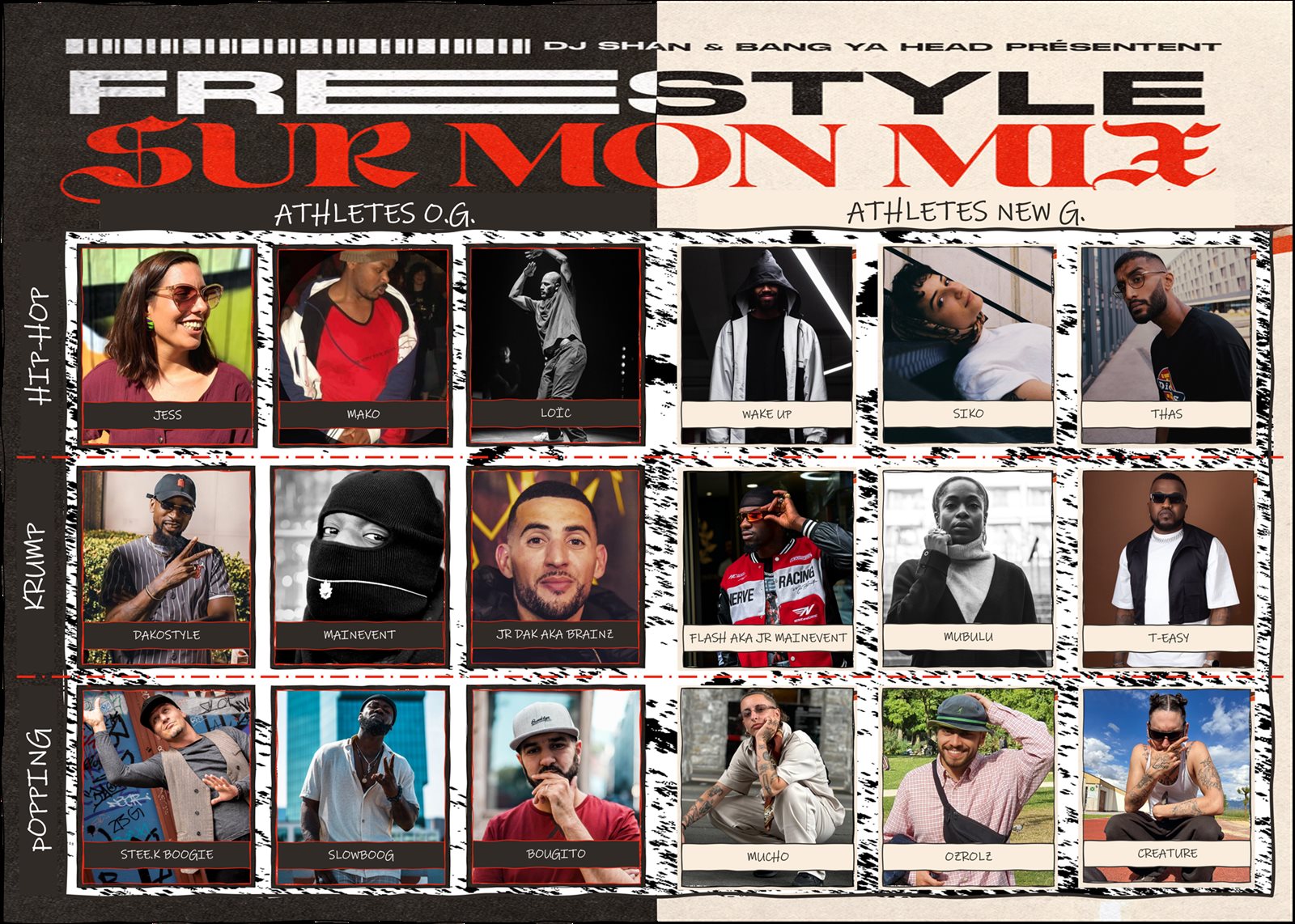
Hip-Hop, Krump, Popping. Each brings together three dancers from the old generation (O.G.) and three from the new one (New G.), so that dance is passed on from one generation to the next.
Two battles per athlete
One battle against a dancer from another category, one battle against a dancer from his own category. Two rounds per battle: one track with lyrics, one instrumental.
The track, drawn by lot
On arrival, each athlete draws his four tracks by lot. Everyone dances to his own tracks, never one track for two. In all, 72 hip-hop tracks, never the same artist twice.
The duels
The first battle is decided by lot. Three urns, one per category; each dancer draws his opponent from a category other than his own. The second stays within the category, where the O.G. himself chooses the New G. he wants to challenge.
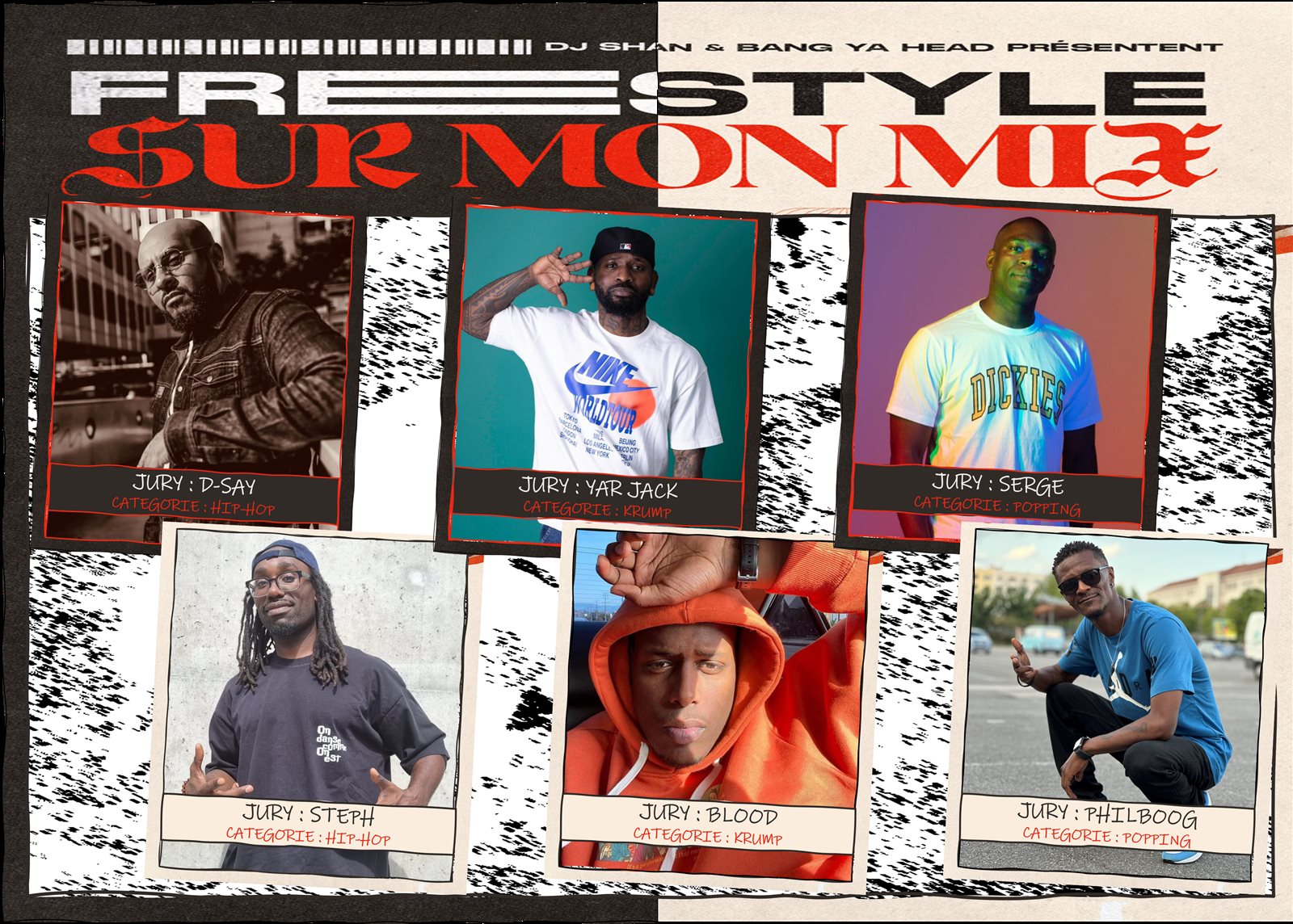
The three voices
Voting happens through three main voices. Each time, it is the judges of the same category who give their feedback to the athletes.
The judges' voice
Six judges, two per category, each with their own technical and cultural eye.
The athletes' voice
The sixteen other dancers, peers and judges at once.
The VIPs' voice
The eighteen guests, the eye of the heart.
An imperishable crown.
The round table
Before the first battle, everyone sits down and talks. A short welcome, the story of Bang Ya Head and of Freestyle sur mon Mix, a thank you to all the athletes and judges, then four open questions.
Athlete or artist?Question 1
Could you tell the difference between an athlete and an artist? And does the place of money in this movement influence your answer?
Hip-hop and its valuesQuestion 2
Is the Hip-Hop category losing its cultural values by turning into a movement of stardom and self-centredness, where sharing disappears?
Krump and respectQuestion 3
How would you describe your relationship to standing dance and to the hip-hop movement, and do you feel respect from the other categories?
Popping and creativityQuestion 4
Could trying to educate your opponent in the battle, rather than letting the dance stay personal, hold back the poppers' creativity?
The Huis Clos opens up, in 2 mixtapes
The 72 tracks the athletes danced to, gathered into two mixtapes that replay the day from one battle to the next. The energy of the battle exhibitions can finally be heard again, to listen to and download freely on the Mixtapes page.